Hit enter to search or ESC to close
Disclaimer: Images used in the articles on this website may be AI-generated and are provided for reference purposes only. Actual products, specifications, dimensions, manufacturing processes, and performance may vary. For accurate product information, real project cases, and detailed documentation, please contact us directly.
October 21, 2026
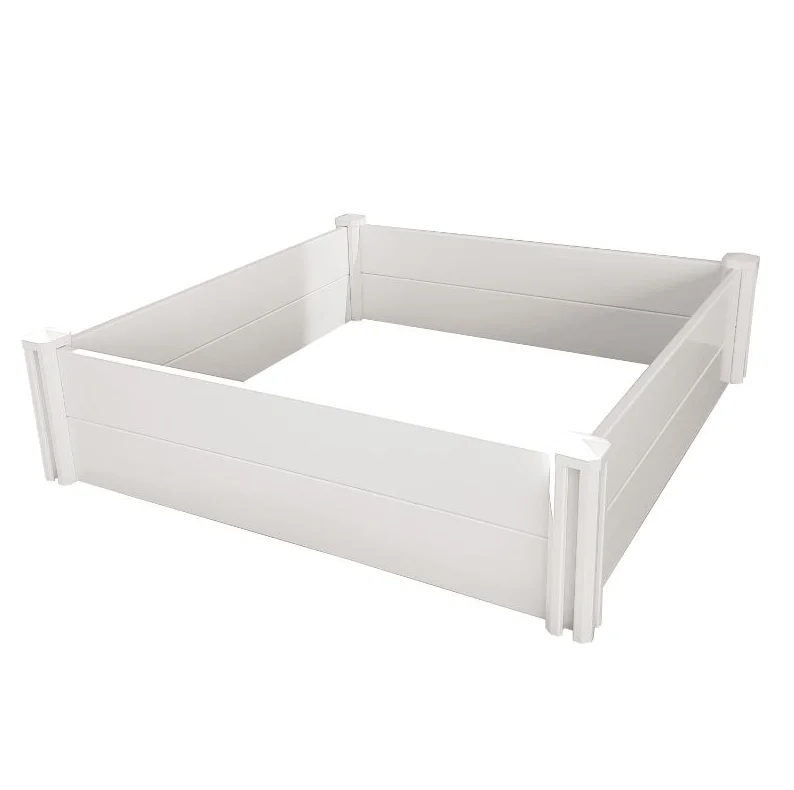
Procurement decisions for PVC raised garden beds require an analytical focus on baseline material facts rather than unverified marketing assertions. Sourcing managers evaluating wholesale programs must assess structural compatibility strictly against documented specifications for outdoor horticulture.
Climate and soil-load variables dictate wholesale viability. Material performance depends directly on environmental exposure conditions.
Wholesale distribution and nursery supply chain planning rely heavily on understanding how thermoplastic components behave under variable weather conditions. Importing partners and brand procurement teams must navigate these material parameters without depending on unverified durability claims. Evaluating commercial viability requires clear alignment between material properties and actual deployment environments for vegetables, herbs, flowers, and patio gardening.
Polymer material deployment for general outdoor horticulture targets specific botanical categories, encompassing produce cultivation, culinary greens, ornamental displays, and residential landscape zones. Procurement planning for agricultural distributors requires aligning panel dimensions directly with actual retail end-user gardening demands rather than relying on unverified consumer expectations. Thermoplastic infrastructure demonstrates distinct resilience advantages over untreated timber in continuously wet-soil environments, preventing structural decay during prolonged seasonal cultivation cycles.
Commercial buyers avoid positioning elevated growing units with absolute terms such as indestructible or maintenance-free. Sourcing managers evaluate functional boundaries based on polymer response variables, ensuring retail distribution partners receive accurate performance parameters. Material suitability for specific regional microclimates remains to be confirmed with the supplier prior to finalizing bulk import schedules.
Wholesale distribution channels supply containerized systems directly to commercial nurseries, agricultural distributors, and retail garden centers. B2B buyers evaluate container load dimensions to align with regional distributor networks and optimize bulk inventory turnover. Compact growing plots established on urban residential paved surfaces require consistent panel configurations to meet installation demands.
Importers review volumetric calculations before container dispatch to ensure shipments align with wholesale distribution agreements. Particular deployment conditions require confirmation regarding material compatibility for specific regional climates. Sourcing teams managing large-scale import programs request comprehensive technical documentation directly from the supplier to verify baseline material suitability.
Seasonal temperature shifts alter the baseline flexibility of thermoplastic components deployed across agricultural layouts. Ambient thermal variations induce expansion and contraction across structural panels, requiring precision in joint allowances during installation. Importers reviewing technical documentation need to analyze how sub-zero winters and high-heat summers influence material rigidity in open-air settings.
Exact mechanical performance thresholds under extreme thermal stress depend on specific compound formulations and vary according to regional climate zones and bulk purchase order specifications.

Continuous contact with moisture challenges the integrity of standard structural polymers. Polymer formulations outperform untreated timber in wet-soil environments by eliminating rot and fungal degradation. Evaluating weatherability profiles helps wholesale importers match the physical limits of the material against regional climate realities.
Procurement teams coordinate technical reviews with manufacturing contacts to map material responses across regional temperature gradients, depending on the agreed-upon batch specifications and destination port requirements.
| Material | Application | Suitability for Humid Environments |
|---|---|---|
| PVC | vegetables, herbs, flowers & patio gardening | High dimensional stability without moisture-induced swelling |
| Thermoplastic Compound | vegetables, herbs, flowers & patio gardening | Resistant to degradation under continuous wet-soil contact |
Procurement teams managing bulk orders must request specific technical documentation directly from manufacturers rather than relying on assumed engineering tolerances. Reviewing dimensional drawings alongside raw material specification sheets prevents costly mismatches during container load assembly.
Panel thickness values, connector tolerances, and linear expansion allowances vary significantly between extrusion batches. Technical files obtained prior to commercial sign-off must explicitly detail these variables to ensure structural stability under variable soil loads.
Establishing direct communication channels with extrusion plants ensures that custom dimensional requirements match active tooling capabilities. Importing partners must verify whether specified panel lengths require specialized cutting fees or transit bracing during maritime shipping.
Commercial buyers evaluate material grade definitions by requesting batch test summaries directly from plant operators. Depending on seasonal production schedules, exact wall thickness measurements and fastening hole placements remain subject to specific manufacturing tolerances.
| Parameter Category | Verification Target | Documentation Source | Evaluation Condition |
|---|---|---|---|
| Dimensional Tolerance | Panel width and length margins | Manufacturer extrusion drawings | Batch production runs |
| Material Formulation | Polymer grade composition | Plant specification sheets | Raw material supply audits |
Verifying structural dimensions through official manufacturer documentation eliminates the financial risks associated with unverified consumer-grade specifications.
Import documentation must remain strictly bounded by verified white-list parameters without referencing unlisted industry standards or testing methodologies. Evaluating material suitability through qualitative performance descriptions prevents the propagation of misleading compliance claims across retail channels.
Technical files provided by the manufacturer serve as the sole legitimate baseline for assessing structural integrity and polymer resilience. Purchasing agents navigating international distribution channels must establish clear operational boundaries regarding environmental directives and regional compliance frameworks.
When specific regulatory identifiers are absent from the approved checklist, importing entities rely on direct documentation requests rather than referencing unlisted directives. Commercial viability assessments depend on verifying material grades against actual deployment environments rather than attaching generalized safety claims to the shipment.
Sourcing managers evaluate these compliance boundaries based on order volume, destination port requirements, and specific material formulations. Operational decisions regarding trade documentation depend directly on the material grade definition and the destination port requirements.
Managing maritime logistics for bulk thermoplastic infrastructure requires aligning packaging dimensions with standard container capacities. Sourcing managers evaluate volumetric efficiency to minimize freight costs when transporting panels from manufacturing facilities to coastal export terminals.
Step-by-step dispatch workflows begin with secure palletization to prevent shifting during inland transit. Protective corner bracing and horizontal banding secure each layer against dynamic loads encountered on arterial highways.
Commercial distribution centers and agricultural wholesale yards manage inventory turnover by maintaining pallet stability in unconditioned storage facilities. Polymeric panels withstand variable ambient temperatures without warping if stacked according to manufacturer weight limits.
Handling protocols dictate that forklifts utilize extended fork attachments to distribute lifting pressure evenly across bundled units. Dropping or side-loading palletized stock introduces localized stress that compromises interlocking channel geometries before final site installation.
Polymer material performance under extreme temperatures depends strictly on regional thermal variations rather than generalized durability assumptions. Sourcing managers align polymer grade selections with local meteorological records, ensuring that seasonal thermal expansion parameters match the intended installation zone. In freezing environments or prolonged high-heat exposures, structural stability relies on the specific compound formulation provided by the manufacturer.
Thermal stability thresholds vary according to the designated bulk order volume and target regional climate requirements. Importing partners evaluate these thermal response limits by reviewing documentation available from the supplier prior to finalizing maritime transit schedules.
Internal soil pressure during intensive horticultural cycles requires precise wall-thickness evaluations to prevent panel deformation. Horticultural applications involving dense soil substrates demand verified structural boundaries that depend on the specific panel dimensions and intended cultivation volume.
Wholesale distribution networks prevent structural sagging by verifying maximum load-bearing limits directly against the supplier's technical documentation. The following matrix outlines the evaluation criteria for matching structural grades to specific deployment conditions.
| Evaluation Parameter | Operational Condition | Verification Requirement |
|---|---|---|
| Thermal Variation | Seasonal temperature shifts in regional markets | Documented through technical files from the supplier |
| Soil Substrate Density | Wet-soil weight during intensive cultivation | Dependent on order volume and panel wall thickness |
| Structural Rigidity | Continuous outdoor exposure on patio surfaces | Verified against specific manufacturing tolerances |
Procuring teams execute a structured verification sequence to confirm material suitability before confirming bulk purchase orders. Sourcing managers request official technical data sheets detailing exact polymer compositions and dimensional tolerances for their target distribution zones.
Final compliance validation requires reviewing test reports provided by the supplier to ensure alignment with commercial import requirements. Importing partners conclude their evaluation by confirming that all structural parameters match the operational demands of regional retail networks.
Wholesale distribution inventory aligns strictly with specialized cultivation categories including vegetables, culinary herbs, ornamental flowers, and patio gardening setups. Importers evaluate these functional boundaries to match retail end-user planting demands without assuming unverified durability claims. Sourcing decisions depend primarily on regional soil loads and retail distribution requirements.
Thermoplastic infrastructure demonstrates distinct moisture resistance advantages over untreated timber in continuously wet soil environments, preventing structural decay during prolonged seasonal cultivation cycles. Polymer formulations maintain structural integrity without requiring chemical preservatives. Operational suitability in specific regional microclimates remains dependent on seasonal temperature fluctuations and moisture exposure levels.
Commercial buyers avoid positioning elevated growing units with absolute terms such as indestructible or maintenance free to ensure transparent retail communication. Sourcing managers evaluate functional boundaries based on polymer response variables, ensuring retail distribution partners receive accurate performance parameters. Final material grade definitions depend strictly on batch production variables and specific container load specifications.
Bulk import schedules require evaluating container load dimensions to align with regional distributor networks and optimize bulk inventory turnover. Transport planning accounts for dimensional stability during maritime transit to prevent structural deformation. Logistics execution depends heavily on port handling protocols and regional distribution channel requirements.
Procurement teams evaluate structural compatibility strictly against documented specifications for outdoor horticulture rather than relying on unverified marketing assertions. Sourcing managers must request exact technical documentation, panel dimensions, and material grade definitions directly from manufacturing partners. Verification schedules vary depending on order volume, destination port requirements, and seasonal manufacturing capacity.
Bulk import programs depend directly on matching container volume parameters with exact destination port logistics capabilities. Sourcing managers evaluate climate-specific requirements against material thickness variables prior to issuing formal purchase authorizations.
Regional distributors finalize wholesale purchase orders after establishing clear verification thresholds for structural dimensions and polymer grade classifications. Final bulk order quantities rely upon container capacity limits, maritime transit schedules, and destination port clearance timelines.

Leave Us a Message


If you are interested in our products, you can choose to leave your information here, and we will be in touch with you shortly.