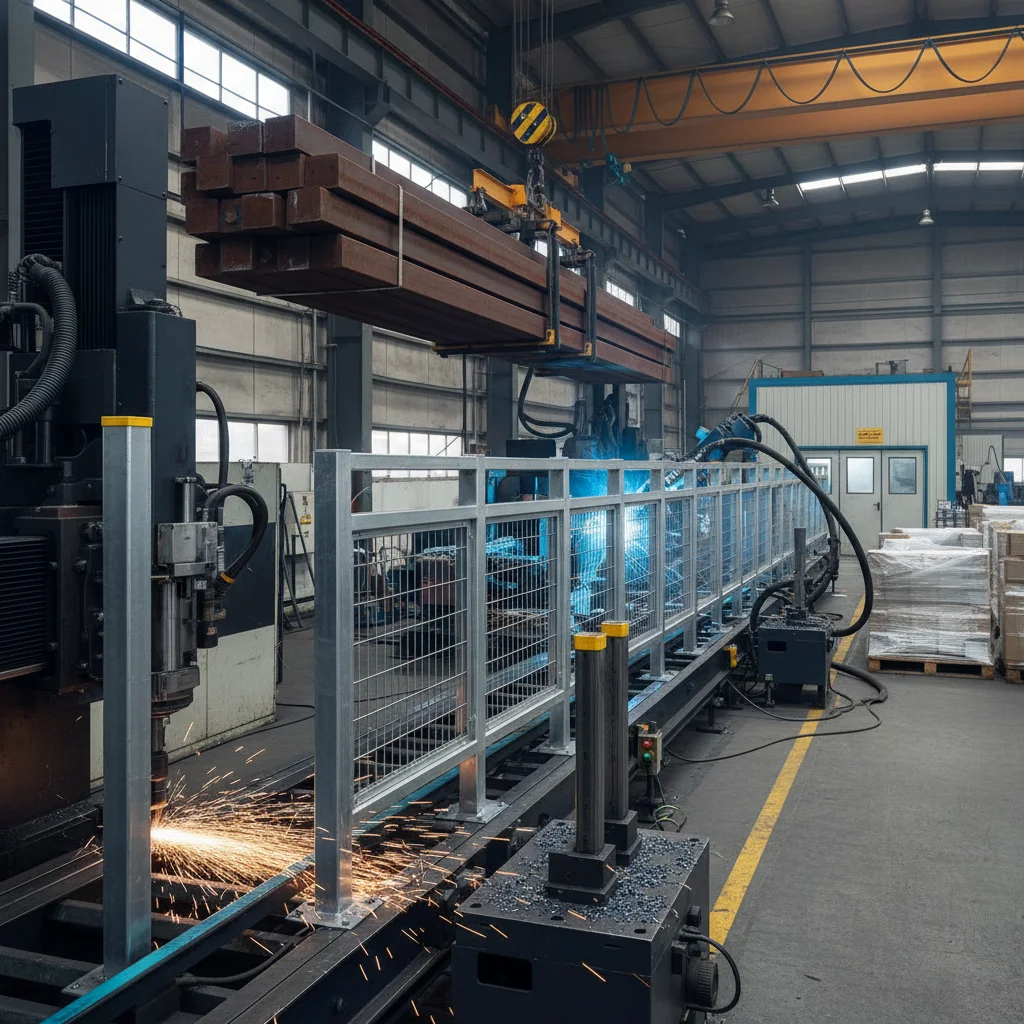
In the modern landscape of infrastructure and site security, the Panel Fence 3d has emerged as a pivotal solution for those seeking a balance between rigid security and rapid deployment. Unlike traditional fencing, these three-dimensional panels provide enhanced structural rigidity through specialized bending techniques, ensuring that the perimeter remains secure even under significant pressure or environmental stress.
Globally, the demand for high-performance boundary systems is rising as urban development accelerates and industrial zones expand. The implementation of a Panel Fence 3d allows facility managers and contractors to establish clear, secure boundaries that are not only visually professional but also functionally superior in terms of impact resistance and longevity.
Understanding the technical nuances of these systems is essential for optimizing operational costs and ensuring safety compliance. By integrating advanced materials and precision engineering, the Panel Fence 3d addresses the critical challenge of maintaining high-security standards without the prohibitive labor costs associated with permanent masonry or heavy steel installations.

Global Context of Panel Fence 3d Systems
On a global scale, the adoption of the Panel Fence 3d is closely tied to the rise of modular construction and the ISO standards for industrial safety. As emerging economies invest heavily in infrastructure, the need for perimeter solutions that can be scaled quickly while maintaining strict safety protocols has become paramount. This shift is driven by the necessity to secure large-scale project sites where traditional fencing is too slow to install or too costly to maintain.
Industry data suggests that modular fencing systems can reduce site preparation time by up to 40% compared to traditional methods. The Panel Fence 3d specifically solves the problem of "panel bowing" and structural fatigue, which are common in flat-panel designs. By incorporating a V-shaped fold, these fences gain an inherent structural strength that allows them to withstand higher wind loads and physical impacts, making them a preferred choice for international logistics hubs and construction zones.
Definition and Industrial Meaning of Panel Fence 3d
In simple terms, a Panel Fence 3d is a prefabricated security barrier characterized by horizontal reinforcement bends (the "3D" aspect) that provide rigidity to the wire mesh. Unlike flat 2D panels, the 3D geometry prevents the fence from sagging over long spans and increases the difficulty of cutting or climbing, thereby enhancing the overall security profile of the installation.
Within the context of modern industry, this system represents a move toward "intelligent boundaries." It is no longer just about creating a wall, but about implementing a system that is easy to transport, fast to assemble, and environmentally sustainable. For humanitarian organizations or government agencies managing temporary zones, the 3D panel design ensures that a professional-grade security perimeter can be established in hours rather than days.
The industrial significance of the Panel Fence 3d also extends to its versatility in coating. Whether using hot-dip galvanization or PVC powder coating, these panels are engineered to resist corrosion in harsh climates, ensuring that the humanitarian or industrial need for a secure boundary is met without the risk of premature material failure.
Core Components and Engineering Factors
The effectiveness of a Panel Fence 3d relies heavily on its material grade. High-tensile steel wire is typically used to ensure that the mesh does not deform under pressure, while the precision of the 3D bends determines the panel's resistance to twisting forces. These engineering factors ensure that the fence remains plumb and secure throughout its lifecycle.
Another critical component is the coating system. A high-quality Panel Fence 3d often employs a dual-layer protection: a zinc-rich primer followed by a UV-resistant PVC or polyester coating. This prevents oxidation at the weld points, which is the most common failure point in inferior fencing systems, thus extending the service life in coastal or industrial environments.
Finally, the scalability of the system is managed through its mounting hardware. The use of standardized clamps and brackets allows the Panel Fence 3d to be integrated with existing posts or new supports without the need for extensive welding on-site. This modularity reduces labor costs and allows for rapid reconfiguration as site needs evolve.
Global Applications and Use Cases
The versatility of the Panel Fence 3d makes it indispensable across various sectors. In the European and North American markets, these systems are frequently used for securing sports complexes, schools, and municipal parks where visibility and safety are equally important. The open-mesh design allows for surveillance while preventing unauthorized access.
In more extreme environments, such as remote mining sites in Australia or industrial zones in Southeast Asia, the Panel Fence 3d is deployed to protect high-value assets. Its ability to be quickly shipped in flat stacks and assembled on-site makes it far more practical than pouring concrete walls in areas with limited infrastructure.
Performance Comparison of Panel Fence 3d Variations
Long-Term Value and Strategic Advantages
Investing in a Panel Fence 3d offers significant tangible benefits over the long term. From a financial perspective, the reduction in maintenance costs is substantial. Because the 3D panels are designed to resist deformation and are treated with high-grade anti-corrosive coatings, the need for frequent painting or panel replacement is virtually eliminated.
Beyond the numbers, there is a psychological value to the installation of a professional Panel Fence 3d. It signals a commitment to safety, order, and innovation. For businesses, this translates into increased trust from clients and stakeholders who see a secure, well-maintained perimeter as a reflection of the company's internal operational excellence.
Future Trends in 3D Fencing Technology
The future of the Panel Fence 3d is leaning heavily toward the integration of "Smart Security." We are seeing a trend where 3D panels are used as the physical substrate for sensor-based detection systems. Fiber-optic cables and vibration sensors can be woven into the 3D mesh, turning a passive barrier into an active alarm system that can pinpoint the exact location of an intrusion attempt.
Sustainability is another driving force. The industry is moving toward using recycled steel and eco-friendly powder coatings that reduce VOC emissions. The Panel Fence 3d is increasingly being designed for a circular economy, where panels can be disassembled, refurbished, and redeployed across different project sites without losing structural integrity.
Automation in manufacturing is also refining the precision of the 3D bends. Robotic welding and laser-cutting are allowing for customized panel shapes and sizes, enabling the Panel Fence 3d to fit perfectly around curved perimeters or irregular architectural features, further expanding its application in high-end commercial landscaping.
Challenges and Innovative Solutions
Despite its advantages, the Panel Fence 3d can face challenges in extremely corrosive environments, such as salt-spray zones near the ocean. In these cases, standard galvanization may not be enough. The innovative solution is the application of a duplex system—combining hot-dip galvanizing with a thick, high-density PVC coating—which creates a nearly impenetrable barrier against chloride ions.
Another common challenge is the potential for "climbing" if the mesh aperture is too large. To solve this, engineers have developed "Anti-Climb" variations of the Panel Fence 3d, which feature smaller mesh openings and vertical reinforcement. This makes it physically impossible for intruders to find a foothold, significantly increasing the security level without needing to increase the height of the fence.
Finally, logistical costs for bulky panels can be a deterrent. To overcome this, the industry has optimized the "nesting" design of 3D panels, allowing more units to be packed into a single shipping container. By reducing the volume of air shipped, the cost per linear meter of the Panel Fence 3d is lowered, making it competitive even for projects in remote geographical regions.
Comparative Analysis of Panel Fence 3d Material and Design Options
| Material Type | Corrosion Resistance | Installation Speed | Security Level |
|---|
| Galvanized Steel 3D | Medium-High | Fast | Standard |
| PVC Coated 3D | Very High | Fast | Standard |
| Heavy Duty 3D | High | Medium | Enhanced |
| Anti-Climb 3D | High | Fast | Maximum |
| Stainless Steel 3D | Maximum | Medium | Standard |
| Modular Hybrid 3D | High | Very Fast | Customizable |
FAQS
The primary difference is the integration of horizontal "V" bends across the panel. These bends create a three-dimensional structure that significantly increases the panel's rigidity and resistance to bending or sagging. This means a Panel Fence 3d can span longer distances between posts without losing its shape, providing a more stable and secure perimeter than flat 2D panels.
Yes, it is highly suitable, provided the correct coating is chosen. The 3D structure allows wind to pass through the mesh, reducing the "sail effect" that often knocks over solid walls. For coastal areas, we recommend a duplex coating (galvanized + PVC) to protect the steel from salt-air corrosion, ensuring the fence remains structurally sound for decades.
Installation is remarkably fast due to the modular design. Because the panels are prefabricated and use a clamp-and-bolt system, a professional team can often install hundreds of linear meters per day. This rapid deployment makes it an ideal choice for construction sites and temporary event security where time is a critical factor.
Absolutely. Customization options include adjusting the wire diameter for increased strength, shrinking the mesh aperture to create an "anti-climb" effect, and adding top extensions like barbed wire or razor wire. The modular nature of the 3D panel allows these upgrades to be added without compromising the structural integrity of the base fence.
Maintenance is minimal. Unlike wooden fences that rot or traditional steel fences that require frequent repainting, a high-quality PVC-coated Panel Fence 3d is virtually maintenance-free. Occasional cleaning with water to remove dust or debris is usually sufficient to keep the fence looking professional and functioning optimally.
When considering the Total Cost of Ownership (TCO), yes. While the initial material cost might be slightly higher than basic chain link, the savings in labor (faster installation) and the elimination of long-term maintenance costs make the Panel Fence 3d a more economical choice over a 5 to 10-year period.
Conclusion
The Panel Fence 3d represents a sophisticated evolution in perimeter security, blending structural engineering with operational flexibility. By addressing the inherent weaknesses of flat panels through its unique 3D geometry and high-performance coatings, it provides a durable, scalable, and professional solution for a wide array of global industrial and commercial needs. From reducing installation timelines to minimizing long-term maintenance, the strategic advantages of this system are clear.
As we move toward a future of smarter and more sustainable infrastructure, the integration of sensing technology and eco-friendly materials will only enhance the value of the Panel Fence 3d. For those looking to secure their assets with a system that balances cost, security, and aesthetics, investing in 3D panel technology is the most logical step forward. Visit our website for more professional fencing solutions: www.sdfencecompany.com