Securing livestock and defining boundaries on a modern agricultural estate requires a balance of strength, visibility, and longevity. The implementation of high-quality Fence Panels Cattle Fence On Farm systems is essential for managing animal movement and protecting valuable assets from external intrusions. By utilizing engineered steel and advanced coatings, farmers can ensure their perimeter remains intact despite the physical pressures of livestock and the unpredictability of nature.
Globally, the demand for durable agricultural fencing has surged as industrial farming scales up and animal welfare standards evolve. A reliable Fence Panels Cattle Fence On Farm solution reduces the labor costs associated with constant repairs and minimizes the risk of livestock escape, which can lead to significant financial losses or legal liabilities. Modern solutions now integrate materials like hot-dipped galvanized steel to combat the corrosive effects of soil and moisture.
Understanding the technical specifications of these systems—from wire gauge and mesh size to the protective PVC coating—allows landowners to make informed investments. Whether deploying temporary barriers for rotational grazing or permanent boundaries for security, the right Fence Panels Cattle Fence On Farm ensures a seamless blend of functionality and safety, creating a structured environment where livestock can thrive and property remains secure.

Global Relevance of Fence Panels Cattle Fence On Farm
In the global agricultural landscape, the efficiency of livestock management is directly tied to the quality of the containment infrastructure. The use of Fence Panels Cattle Fence On Farm has become a worldwide standard for preventing herd migration and protecting crops from animal damage. According to industry benchmarks, the transition from traditional wooden rails to galvanized steel mesh has significantly reduced maintenance overhead for large-scale farms across North America, Europe, and Asia.
The primary challenge addressed by these systems is the harsh environmental exposure that typical farm lands face. From extreme humidity to alkaline soils, the materials used in Fence Panels Cattle Fence On Farm are engineered to resist oxidation. By employing carbon steel wire treated with hot-dipped galvanization and PVC coating, these panels maintain structural integrity and safety for both the animals and the handlers over several decades.
Defining Modern Farm Fencing Systems
When we discuss Fence Panels Cattle Fence On Farm, we are referring to high-strength, modular barrier systems typically constructed from woven chain link or welded wire mesh. These systems are designed to be versatile, offering various wire gauges (such as 11.5ga or 12.5ga) and mesh sizes (ranging from 2 to 3 inches) to accommodate different livestock sizes and security requirements.
Beyond simple containment, these panels serve a critical role in modern humanitarian and industrial needs by ensuring food security and organized land use. The precision weaving of the diamond wire mesh provides a uniform structure that prevents animals from getting snagged, while the smooth finish reduces the risk of injury, aligning with global animal welfare standards.
In essence, a modern cattle fence is no longer just a boundary; it is a tool for precision farming. By utilizing Fence Panels Cattle Fence On Farm, farmers can implement rotational grazing patterns more effectively, allowing pastures to recover and improving the overall sustainability of the land.
Core Components of Durable Cattle Panels
The effectiveness of Fence Panels Cattle Fence On Farm relies heavily on material science. The foundation is high-quality carbon steel wire and pipes, which provide the necessary tensile strength to withstand the physical pressure of leaning cattle. This raw strength is then augmented by a hot-dipped galvanized surface, which creates a sacrificial zinc layer to prevent rust.
To further enhance durability, many Fence Panels Cattle Fence On Farm are PVC coated. This polymer layer not only provides an additional shield against corrosion but also offers a smooth, non-abrasive surface that is essential for animal safety. The combination of a 32mm tube diameter and 1.6mm thickness ensures the frame remains rigid under external forces.
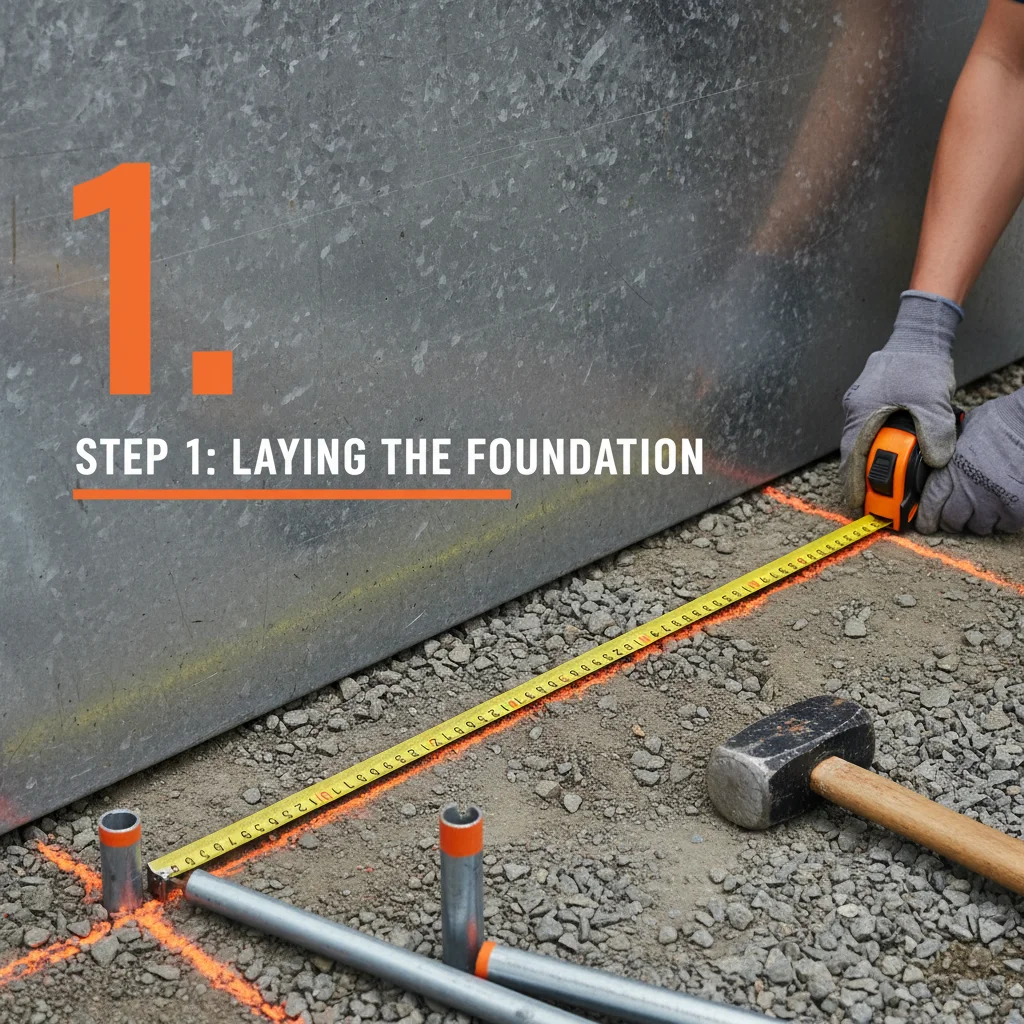
Installation stability is the final core component. These panels are often crafted with angled edges for a seamless fit and are delivered in manageable sets (e.g., 50 panels per pallet). For high-security areas, the addition of barbed edges can be integrated into the Fence Panels Cattle Fence On Farm to deter predators or unauthorized human intruders.
Practical Applications in Agricultural Zones
The versatility of Fence Panels Cattle Fence On Farm allows them to be deployed across various scenarios. In temporary livestock pens or during animal transport, the modular nature of the 3050mm wide panels enables rapid setup and teardown. This is particularly useful for farmers who need to move herds between different grazing sectors to prevent overgrazing.
Beyond livestock, these systems are utilized in commercial agricultural sites for crowd control during livestock auctions or in industrial zones to secure equipment and feed storage areas. The ability to customize dimensions and pipe thickness makes Fence Panels Cattle Fence On Farm suitable for everything from light-duty boundary marking to heavy-duty animal containment.
Performance Comparison of Fence Panels Cattle Fence On Farm Options
Long-Term Value and Sustainability
Investing in professional-grade Fence Panels Cattle Fence On Farm offers a significant return on investment by drastically reducing the cycle of replacement. While low-cost wooden or untreated wire options may seem attractive initially, they often succumb to rot or rust within a few seasons. In contrast, the hot-dipped galvanized and PVC-coated steel panels provide a long-term solution that resists the elements.
From a sustainability perspective, the longevity of these materials means fewer resources are consumed over time for repairs. Furthermore, the stability provided by Fence Panels Cattle Fence On Farm ensures that livestock are kept in designated areas, which protects the biodiversity of surrounding wildlands and prevents soil erosion caused by uncontrolled grazing.
Future Trends in Farm Perimeter Security
The future of Fence Panels Cattle Fence On Farm is moving toward smarter, more integrated systems. We are seeing a rise in the combination of physical steel barriers with digital monitoring tools, such as tension sensors and solar-powered electronic alerts, which notify farmers of a breach in real-time.
Material innovation continues to evolve, with a focus on even more eco-friendly coatings that provide the same corrosion resistance as PVC but with a smaller environmental footprint. The integration of modular, "snap-and-lock" mechanisms is also making the deployment of Fence Panels Cattle Fence On Farm faster and more intuitive for farm laborers.
As automation increases in agriculture, the demand for precision-engineered fencing will grow. Future Fence Panels Cattle Fence On Farm will likely be designed to work in tandem with automated gates and robotic livestock management systems, creating a fully autonomous perimeter security network.
Overcoming Common Fencing Challenges
One of the most common challenges in farm fencing is the instability caused by shifting soil or aggressive livestock. To overcome this, the use of Fence Panels Cattle Fence On Farm with a 32mm tube diameter provides the necessary rigidity to prevent bowing. Additionally, customizing the mesh size (2" to 3") ensures that smaller animals cannot slip through while larger animals cannot easily push through the wires.
Another significant hurdle is the rapid corrosion in coastal or high-moisture regions. The solution lies in the dual-layer protection of hot-dipped galvanization followed by a PVC coating. This synergy ensures that even if the outer polymer layer is scratched, the underlying zinc layer continues to protect the carbon steel from oxidation, extending the life of the Fence Panels Cattle Fence On Farm.
Finally, the logistics of installing miles of fencing can be daunting. By utilizing pre-fabricated panels packaged in sets of 50 on pallets, the installation process is streamlined. This modular approach to Fence Panels Cattle Fence On Farm minimizes onsite labor and ensures a consistent, professional finish across the entire property boundary.
Technical Specification Analysis of Cattle Fence Panel Variants
| Panel Variant | Wire Gauge / Tube | Coating Type | Application Suitability |
|---|
| Heavy-Duty Cattle | 11.5ga / 32mm Tube | Galvanized + PVC | High-pressure livestock |
| Standard Farm | 12.5ga / 32mm Tube | Hot-Dipped Galv. | General boundary marking |
| Temporary Pen | 12.5ga / 1.6mm Wall | Galvanized | Rotational grazing/Events |
| High-Security | 11.5ga / Barbed Edge | PVC Coated | Predator/Intruder control |
| Coastal Special | 12.5ga / 32mm Tube | Extra-Thick PVC | Salt-air environments |
| Light-Duty Enclosure | 14ga / 32mm Tube | Galvanized | Small livestock/Poultry |
FAQS
Galvanized panels are treated with a zinc coating to prevent rust, which is highly effective for standard agricultural use. PVC-coated panels add a polymer layer over the galvanization, providing superior corrosion resistance in harsh environments and a smoother surface that is safer for livestock, reducing the risk of skin abrasions or snags.
The choice depends on the animal size and the level of pressure expected. For heavy livestock like cattle, a 11.5ga wire is recommended for its higher tensile strength and resistance to bending. For smaller animals or temporary boundaries, a 12.5ga wire is typically sufficient, offering a balance between cost-efficiency and durability.
Yes, the modular design of our temporary fence panels—measuring 3050mm wide—makes them ideal for rotational grazing. They can be quickly assembled and moved across the pasture, allowing farmers to manage grass growth and soil health effectively without the need for permanent, immovable structures.
With a combination of carbon steel, hot-dipped galvanization, and PVC coating, these panels are designed for long-term use. Depending on the environmental conditions, they can remain functional for decades. Regular inspections and ensuring the posts are securely anchored will maximize the lifespan of the installation.
Absolutely. We understand that every farm has unique topography and livestock requirements. We offer customization options for pipe thickness, overall panel dimensions, and mesh sizes to ensure the fencing solution perfectly fits the specific needs of your agricultural operation.
To ensure efficiency and prevent damage during transit, panels are carefully packed in sets of 50 on industrial pallets. This allows for easy unloading via forklift or crane and ensures that the panels arrive in pristine condition, ready for immediate assembly on the farm.
Conclusion
Implementing high-performance Fence Panels Cattle Fence On Farm is a strategic investment in the security and operational efficiency of any agricultural enterprise. By combining the raw strength of carbon steel with advanced hot-dipped galvanization and PVC coating, these systems solve the perennial problems of corrosion, animal injury, and livestock escape. The modularity and durability of these panels provide a scalable solution that adapts to the changing needs of a working farm, ensuring long-term stability and peace of mind for the landowner.
As the industry moves toward more sustainable and technologically integrated farming practices, the role of high-quality perimeter infrastructure will only become more critical. We recommend that farmers prioritize material specifications and coating quality over initial cost to avoid the expensive cycle of constant replacement. For those seeking a professional, durable, and safe fencing solution, we invite you to explore our full range of agricultural and industrial barriers. Visit our website: www.sdfencecompany.com