Hit enter to search or ESC to close
When planning a boundary project, the primary conflict often lies between the desire for permanent security and the constraints of the project budget. Understanding the variables that influence Precast Concrete Fence Panels Price is essential for avoiding unforeseen costs during the installation phase.
Concrete fencing has shifted from basic industrial utility to a versatile architectural choice. However, the shift toward prefabrication has introduced a complex pricing structure influenced by raw material volatility, mold complexity, and logistics, making it difficult for buyers to determine a fair market value without a technical breakdown.
This guide analyzes the economic and technical drivers of concrete paneling, providing a framework to evaluate costs against longevity and performance.


The pricing of precast concrete is not static; it is a reflection of the supply chain for cement, aggregates, and steel reinforcement. Because these panels are heavy, transportation often accounts for a significant percentage of the total quote. Logistics costs fluctuate based on the distance from the casting plant to the installation site, often necessitating local sourcing to keep budgets manageable.
Furthermore, the complexity of the mold plays a critical role. Standard flat panels are the most economical, while decorative textures or specialized architectural shapes require higher initial tooling costs and slower curing cycles, which are passed on to the end buyer.
The structural integrity of a concrete panel depends on the concrete grade and the inclusion of reinforcement. High-strength mixes, often utilizing advanced admixtures to reduce porosity, increase the unit price but significantly extend the lifespan by preventing water ingress and freeze-thaw cracking.
Reinforcement typically involves galvanized steel or synthetic fibers. While galvanized steel provides excellent tensile strength, it increases the Precast Concrete Fence Panels Price due to the cost of the metal and the labor required for precise placement within the mold to ensure proper concrete cover.
Finish quality also creates price tiers. A raw, industrial finish is the baseline, whereas smoothed, painted, or sealed surfaces require additional processing steps. These coatings are not merely aesthetic; they provide a critical barrier against environmental pollutants and moisture.
Choosing a fencing system requires a balance between initial capital expenditure and long-term operational costs. Concrete is often viewed as a high-upfront-cost option, yet its lack of required maintenance over decades often makes it the cheapest choice on a per-year basis.
The true value of precast concrete lies in its "set-and-forget" nature. Unlike timber which rots or steel which may rust, high-grade concrete maintains structural stability with minimal intervention, effectively reducing the total cost of ownership over a 20-year horizon.
This equilibrium is further shifted by the speed of installation. Because panels are cast in controlled environments, site time is reduced. This lower labor cost partially offsets the material price, especially in large-scale commercial developments.
When comparing concrete to other boundary solutions, the assessment must move beyond the price per linear foot. Factors such as permeability, sound attenuation, and wind resistance provide "invisible" value that impacts the overall utility of the installation.
For those seeking alternatives to solid concrete, modular metal systems like those offered by Shijiazhuang S D Company Ltd. provide different value propositions. For instance, Gabion boxes offer high permeability and erosion control, which are critical for slope stabilization where a solid concrete wall would fail due to hydrostatic pressure.
Precast concrete is most effective in scenarios requiring high acoustic privacy or extreme security. In industrial zones, where noise pollution from machinery must be contained, the mass of concrete panels provides superior sound dampening compared to lightweight aluminum or chain-link systems.
Conversely, in residential landscaping, the rigid nature of concrete can be a limitation. For these areas, a hybrid approach is often adopted, combining concrete for the main perimeter and ornamental aluminum or WPC fencing for internal garden divisions to maintain an open, aesthetic feel.
The industry is moving toward "smart" materials that reduce the carbon footprint of construction. Precast concrete is evolving through the use of recycled aggregates and carbon-sequestering cements, which may shift the pricing model toward sustainability premiums.
Concurrent with these changes, there is a growing trend toward permeable boundaries. The use of galvanized and PVC-coated welded wire mesh in Gabion systems has become a professional-grade alternative for civil engineering, specifically for erosion control and river bank protection.
This diversification means that buyers are no longer limited to a single material. The decision now involves a technical audit of the terrain—using concrete for stability and metal mesh systems for drainage and environmental integration.
To avoid overpaying or under-specifying, buyers should use a weighted evaluation matrix. This involves scoring potential materials against their specific project needs: security, budget, environment, and maintenance capacity.
For those focusing on long-term infrastructure, comparing a solid concrete wall to a welded Gabion cage reveals a clear trade-off: concrete offers maximum rigidity, while Gabion systems provide flexibility and eco-friendly permeability.
The following framework illustrates the relative suitability of different systems based on common project requirements.
| Requirement | Precast Concrete | Steel/Aluminum | Gabion Systems | PVC/WPC |
|---|---|---|---|---|
| Initial Cost | High | Moderate | Low-Moderate | Moderate |
| Installation Speed | Fast (Modular) | Moderate | Very Fast | Fast |
| Maintenance | Minimal | Moderate (Paint) | Minimal | Low |
| Lifespan | Very High | High | High | Moderate |
| Eco-Impact | Moderate | Low | Very Low | Moderate |
| Security Level | Maximum | High | Moderate | Low |
The price is mainly influenced by three factors: raw material costs (cement and steel), the complexity of the mold design, and logistics. Since concrete panels are heavy, the distance from the manufacturer to the site can significantly impact the final quote. Additionally, the grade of concrete and the type of reinforcement used—such as galvanized steel—will determine the structural cost.
Concrete offers maximum rigidity and privacy, making it ideal for security boundaries. Gabion cages, consisting of galvanized wire mesh filled with stone, provide superior permeability and are often more cost-effective for erosion control and slope stabilization. While concrete is a "barrier," Gabions are a "system" that interacts with the environment, offering better drainage and a lower carbon footprint.
Yes, when evaluated through a Total Cost of Ownership (TCO) lens. Concrete requires almost no maintenance compared to timber, which needs staining, or steel, which may require rust treatment. Over a 20-year period, the lack of repair costs often makes precast concrete more economical than cheaper, less durable materials.
Absolutely. Modern precast technology allows for various textures, colors, and shapes. Many homeowners use concrete for the outer perimeter and integrate ornamental aluminum or PVC fencing for inner gardens to balance security with aesthetic appeal. Sealed finishes can also be applied to match the surrounding architecture.
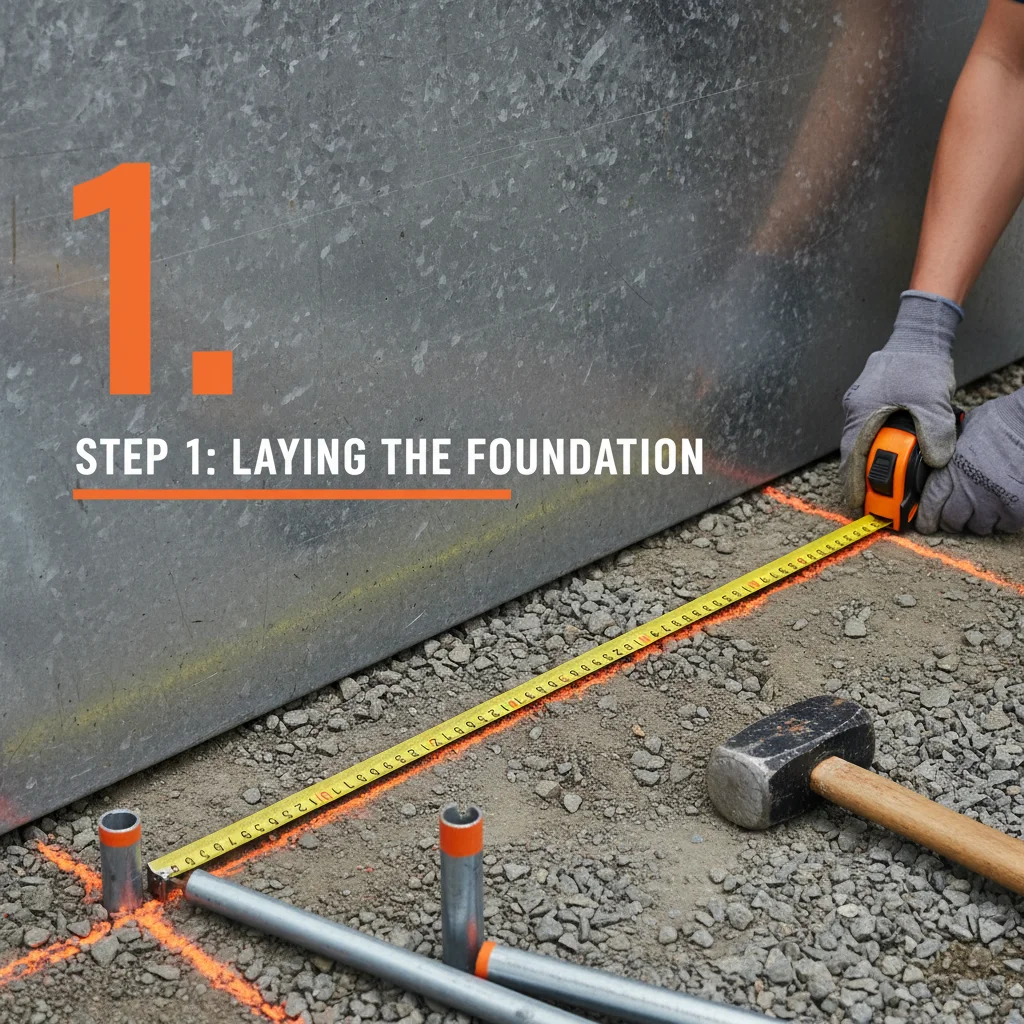
Precast panels are manufactured in a controlled factory environment, ensuring consistent quality and strength. On-site, they are simply slotted into pre-installed posts. This eliminates the need for extensive formwork, curing time on-site, and minimizes weather-related delays, significantly reducing labor costs.
In highly corrosive environments, PVC-coated materials or high-grade concrete are preferred. For coastal erosion, PVC-coated Gabion boxes are exceptionally effective because they combine the strength of galvanized steel with a plastic barrier that prevents saltwater oxidation, while allowing water to flow through the structure.
Selecting a boundary system is a technical decision that extends far beyond the initial quote. Whether prioritizing the absolute security of precast concrete or the environmental versatility of metal mesh systems, the focus must remain on the intersection of site requirements and long-term durability.
By analyzing the drivers of Precast Concrete Fence Panels Price and comparing them with alternative industrial solutions, project managers can ensure an investment that provides security without compromising the project's financial viability.



If you are interested in our products, you can choose to leave your information here, and we will be in touch with you shortly.