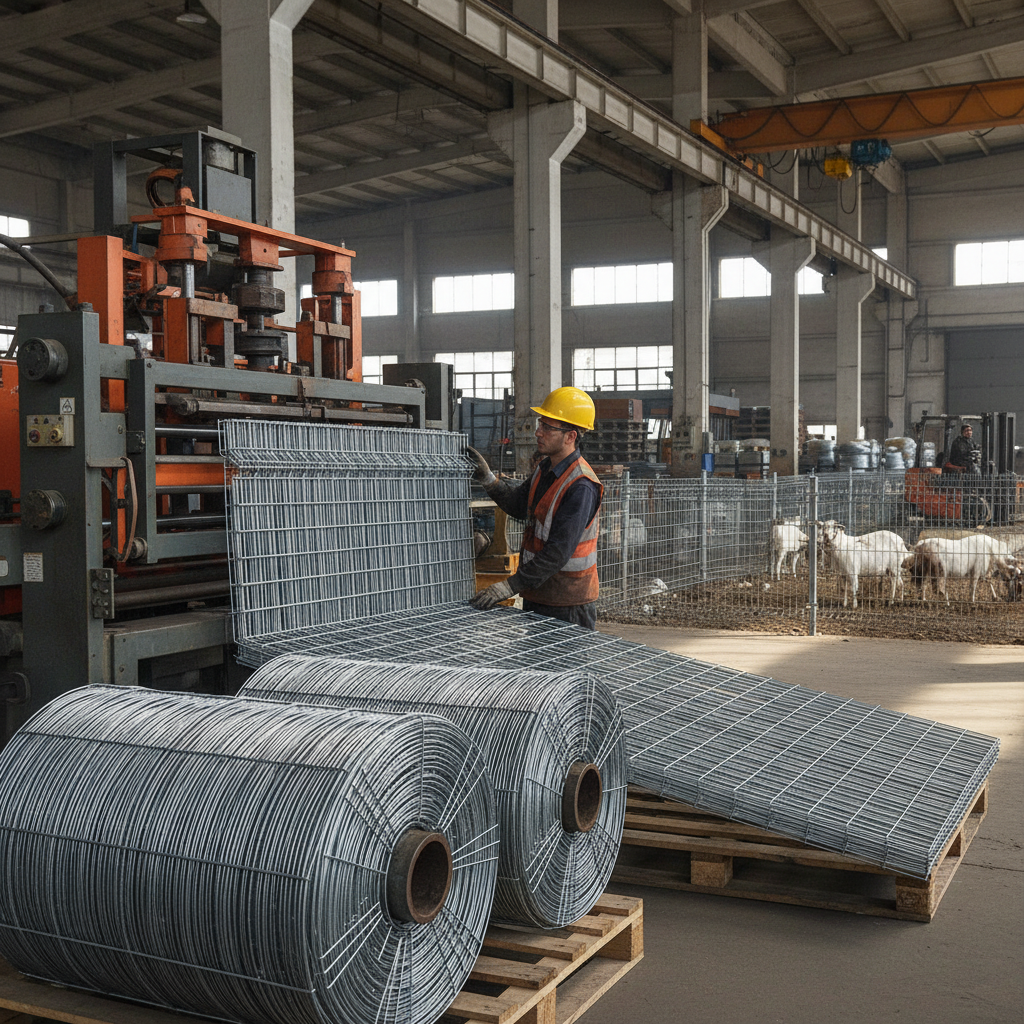

The production of industrial security barriers requires a precise balance of structural rigidity and material resilience. When analyzing the Rail Fence Wall Panel Making Production Li, the primary goal is to create a system that offers consistent protection while remaining adaptable to various terrains. This process involves specialized machinery designed to handle heavy-gauge carbon steel and aluminum, ensuring that every panel meets rigorous safety and durability benchmarks for residential and commercial use.
In the broader context of the metal fabrication industry, the move toward automated weaving and welding has significantly reduced human error, leading to uniform mesh spacing and enhanced aesthetic appeal. For businesses and property managers, understanding the manufacturing nuances—such as the difference between hot-dipped galvanizing and PVC coating—is critical for making an informed procurement decision. The efficacy of a boundary system depends not only on the raw material but also on the precision of the production line and the quality control measures implemented during fabrication.
This article provides a comprehensive technical exploration of fence panel production, focusing on the engineering requirements for long-term stability. Readers will learn about the critical factors influencing corrosion resistance, the role of wire gauges in security levels, and how to evaluate supplier capabilities. By mapping the transition from raw carbon steel to a finished, coated wall panel, we aim to provide a decision-making framework for engineers and procurement officers seeking reliable perimeter solutions.
Industrial Fencing Production Fundamentals
Modern perimeter security manufacturing is rooted in the science of metallurgy and mechanical engineering. The core objective is to transform raw steel wire and pipes into interlocking panels that can withstand significant lateral pressure and environmental stress. A critical component of this process is the selection of raw materials; for instance, using high-grade carbon steel ensures the necessary tensile strength to prevent sagging or deformation over time. The production flow typically begins with wire drawing, followed by weaving or welding, and concludes with protective surface treatments. According to the structural principles of a Rail Fence Wall Panel Making Production Li, the alignment of horizontal rails and vertical supports is what dictates the overall load-bearing capacity of the installation. In the Hebei region of China, the proximity to major steel mills allows for a seamless supply chain, reducing lead times and ensuring that materials are processed while maintaining optimal metallurgical properties. This vertical integration is essential for maintaining consistency across large-scale orders, where even a minor deviation in wire diameter can compromise the uniformity of the mesh and the overall security of the property.
Technical Analysis of Panel Manufacturing
The transition from raw materials to a finished security product involves several high-precision stages. Each stage must be monitored to ensure that the final wall panel adheres to industrial standards for corrosion resistance and structural stability. The following sections detail the specific technical dimensions that determine the value and longevity of the fencing system.
Material Selection and Durability
The choice between carbon steel, aluminum, or WPC depends on the intended application environment. For high-security industrial sites, carbon steel is the standard due to its unmatched strength. However, the vulnerability of steel to oxidation requires advanced coatings. Aluminum is preferred for decorative or coastal applications where salt-air corrosion is a primary concern. The balance of weight and strength is the key metric here; a heavier gauge wire increases security but also increases the load on the support posts, necessitating a more robust foundation.
| Material Type | Primary Advantage | Common Risk | Best Use Case |
|---|---|---|---|
| Carbon Steel | High Tensile Strength | Oxidation/Rust | Industrial Security |
| Aluminum | Natural Corrosion Resistance | Lower Impact Strength | Coastal/Decorative |
| PVC Coated Steel | Enhanced Weatherproofing | UV Degradation | Residential/Garden |
| Galvanized Steel | Balanced Cost/Life | Zinc Layer Wear | Agricultural/Farm |
| WPC | Low Maintenance | Lower Structural Rigidity | Privacy Screening |
| Stainless Steel | Extreme Durability | High Material Cost | Chemical Plants |
Weaving and Welding Precision
Uniformity in mesh spacing is not just an aesthetic requirement but a functional one. In chain link production, state-of-the-art machinery is used to ensure a consistent diamond pattern. Any irregularity in the weave can create weak points that are susceptible to cutting or bending. For welded panels, the fusion point between wires must be complete and devoid of slag to prevent premature failure. Precision welding ensures that the panel remains planar and does not warp during the cooling process, which is essential for a seamless fit during on-site installation.
Corrosion Resistance Treatments
Surface treatment is the most critical factor for the lifecycle of a metal fence. Hot-dipped galvanizing involves immersing the steel in molten zinc, creating a metallurgical bond that protects the underlying steel from rust. PVC coating adds an extra layer of protection and allows for color customization. For environments with high acidity or humidity, a combination of both—galvanized steel with a PVC overcoat—provides the maximum defense against the elements, significantly reducing the frequency of repairs and replacements.
Structural Integrity Standards
A wall panel's integrity is measured by its resistance to deformation under pressure. This is achieved through the correct calculation of wire gauge and post diameter. The use of angled edges in rolls minimizes installation risks and ensures a secure wrap around the tension wires. For high-security requirements, the addition of barbed edges acts as a physical deterrent. Ensuring that these components are integrated during the production phase rather than added as afterthoughts ensures a more cohesive and stronger structure.
Customization of Mesh Gauges
Different applications require different mesh sizes. A tight mesh is necessary for preventing the entry of small animals or children, while a wider mesh may be sufficient for general boundary marking. Procurement officers must specify the wire gauge (thickness) and mesh aperture based on the risk assessment of the site. Customization allows for a tailored solution that balances cost with the required level of security, avoiding the inefficiency of over-engineering or the risk of under-specifying.
Installation Engineering
The quality of a manufactured panel is wasted if the installation is flawed. Proper spacing of posts and the use of high-quality tension bars are essential to maintain the tension of the mesh. For temporary fencing, the focus is on rapid deployment and stability, utilizing palletized packaging for efficient transport. Permanent installations require deep-set concrete footings to ensure that the panels do not shift over time due to soil movement or wind loads, maintaining the verticality of the entire system.
Lifecycle Maintenance
Even the best-produced panels require periodic inspection. Maintenance involves checking for tension loss, identifying areas where the protective coating may have been scratched, and applying touch-up galvanizing spray to prevent localized rust. By implementing a scheduled maintenance routine, the operational life of the fence can be extended by decades. Understanding the degradation patterns of different coatings helps operators predict when a full panel replacement will be necessary, allowing for better budget planning.
FAQ
What is the primary difference between hot-dipped galvanizing and PVC coating?
Hot-dipped galvanizing creates a chemical bond of zinc to the steel, providing deep-level corrosion protection that is highly durable. PVC coating is a plastic layer applied over the metal, offering an additional moisture barrier and aesthetic color options. For maximum longevity in harsh environments, using a galvanized core with a PVC coating is recommended as it combines structural protection with a weather-resistant outer shell.
How do I choose the correct wire gauge for a commercial property?
Selection should be based on the security level required. Heavier gauges provide more resistance to cutting and impact but increase cost and weight. For standard commercial boundaries, a medium gauge is usually sufficient. However, if the fence is intended to secure high-value assets or prevent forced entry, a heavier gauge combined with a tighter mesh aperture is necessary. Always consult the manufacturer's technical specifications to match the gauge with your site's risk profile.
Can these wall panels be customized for specific architectural styles?
Yes, customization is possible through the selection of materials and finishes. For instance, aluminum and WPC fences offer a more contemporary look and can be integrated into garden or residential designs. Steel panels can be PVC-coated in various colors to blend with the surroundings. By adjusting the mesh size and rail configuration, manufacturers can create a solution that meets both the security requirements and the aesthetic guidelines of a specific project.
What are the signs that a fence panel needs replacement rather than repair?
Replacement is necessary when structural integrity is compromised. Signs include deep-seated rust that has penetrated the core steel (pitting), significant warping or bending of the rails that cannot be straightened, or widespread cracking of the PVC coating that exposes the metal to the elements. If more than 20% of a panel's surface is severely corroded, replacing the individual panel is more cost-effective than attempting multiple localized repairs.
How does the proximity to raw material sources affect the quality of the fence?
Proximity to steel mills, such as those in Hebei, China, reduces the risk of material degradation during transport and ensures a consistent supply of high-grade carbon steel. This allows manufacturers to maintain strict quality control over the raw inputs, leading to more uniform panels. Furthermore, it reduces logistical costs and lead times, which is a critical advantage for large-scale infrastructure projects requiring urgent delivery of thousands of panels.
Are barbed edges an effective deterrent for industrial sites?
Yes, strategically placed barbed edges significantly increase the difficulty of scaling a fence. They act as a psychological and physical deterrent to intruders. When integrated into the production of the top rail, they provide a seamless and secure addition to the perimeter. However, for sites where public safety is a priority, these should be installed at a height that prevents accidental contact while still maintaining the security benefit.
References and further reading
- ASTM International - Standard Specifications for Zinc-Coated Steel Wire
- ISO 9001:2015 - Quality Management Systems for Metal Fabrication
- American Wire Cloth Institute (AWCI) - Mesh Sizing and Gauge Standards
Related Articles